
Home |
Temáticas |
Catálogos |
Pedidos |
| |
|||||||
|

|
RUGENDAS. (Johann Moritz) HABITANTE DE GOYAS, QUADRO A ÓLEO PINTADO SOBRE MADEIRA. |
|

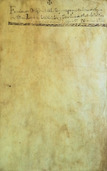
Clique nas imagens para aumentar. MANUSCRITO - SÉCULO XIX - CARTA PATENTE DO REI DOM CARLOS I, NOMEIA ALBERTO DE OLIVEIRA CONSUL GERAL EM TANGER.Dada no Palácio das Necessidades aos vinte e seis dias do mez de Junho do anno do Nascimento de Nosso Senhor Jesus Cristo de mil oitocentos e noventa e seis. [26 de Junho de 1896] De 44x55 cm. Com 1 folha de papel com as armas reais de Portugal à cabeça ao centro do documento que tem o texto enquadrado por uma tarja composta por motivos vegetalistas que se repetem e com florões nos cantos interiores da esquadria. Com 12 linhas mais o resumo com duas linhas. Assinada pelo Rei D. Carlos. Com fita de seda azul e branca, mas sem o selo que deveria estar pendente dela. Documento muito importante para a biografia do escritor e diplomata Alberto de Oliveira, relativo à sua nomeação para o primeiro posto no estrangeiro da sua longa carreira diplomática. Alberto de Oliveira (Porto, 1873 - São Mamede de Infesta, 1940) formou-se em direito na Universidade de Coimbra, onde se matriculou com apenas 14 anos, foi escritor, poeta (de grande precocidade) e diplomata. Marcou a história da literatura portuguesa com a criação do movimento Neogarretista, que consistia na defesa do que é nacional, o retorno ao rusticismo e à vernaculidade, o abandono de modelos culturais estrangeiros e a recuperação da literatura popular enquanto fonte genuína da cultura portuguesa. Além de poesias é autor de ensaios, crónicas, memórias sobre a sua amizade com Eça de Queiroz e António Nobre e sobre a sua vida e actividades enquanto diplomata. Enquanto frequentava a Universidade de Coimbra, fundou a revista Boémia Nova, em conjunto com António Nobre, onde contribuiu para afirmação dos movimentos decadentista e simbolista em Portugal, nomeadamente durante a polémica com a revista Os Insubmissos de Eugénio de Castro. Em 1894 publicou a colectânea de ensaios Palavras Loucas, onde apresentou o programa do Neogarretismo. Dirigiu, em 1921, o semanário monárquico e integralista Acção Nacional e colaborou na Revista de Portugal, fundada por Eça de Queiroz e nas revistas Jornal de Domingo, Branco e Negro e Atlântida e nos jornais Diário de Notícias, O Século, O País, Jornal de Notícias, O Primeiro de Janeiro, e Jornal do Domingo. Como diplomata desenvolveu uma longa carreira começando por ser Cônsul em Tanger, (a que esta carta patente de nomeação se refere), Representante diplomático em Berna, de 1902 a 1910, participou na Conferência de Haia em 1907, foi consul em Berlim pelos menos entre 1912 e 1913; Consul Geral no Reio de Janeiro, Brasil de 1914 e 1918; na Argentina, em Bruxelas, Ministro plenipotenciário em Roma, (16-12-1921 a 10-02-1931), no Vaticano, e por fim embaixador em Londres desde 1935. No fim da vida participou na preparação da Exposição do Mundo Português de 1940.
Dated at the Palace of Necessidades on the twenty-sixth day of June in the year of the Birth of Our Lord Jesus Christ one thousand eight hundred and ninety-six. [26 June 1896] 44x55 cm. 1 sheet of paper with the royal coat of arms of Portugal on the middle top of the document, which has the text framed by a border composed of repeating vegetalist motifs and with fleurons at the inner corners of the square. With 12 lines plus a two-line summary. Signed by King D. Carlos. With blue and white silk ribbon, but without the seal that should have been hanging from it. Very important document for the biography of the writer and diplomat Alberto de Oliveira, concerning his appointment to the first foreign post of his long diplomatic career. Alberto de Oliveira (Porto, 1873 - São Mamede de Infesta, 1940) graduated in law from the University of Coimbra, where he enrolled at the age of 14; he was a writer, poet (of great precocity) and diplomat. He marked the history of Portuguese literature with the creation of the Neo-Garretist movement, which consisted in the defence of what is national, the return to rusticism and vernacularism, the abandonment of foreign cultural models and the recovery of popular literature as a genuine source of Portuguese culture. Besides poetry, he is also author of essays, chronicles, memoirs about his friendship with Eça de Queiroz and António Nobre, and about his life and activities as a diplomat. While attending the University of Coimbra, he founded the magazine Boémia Nova, together with António Nobre, where he contributed to the affirmation of the decadentist and symbolist movements in Portugal, namely during the polemic with Eugénio de Castro's Os Insubmissos. In 1894, he published the collection of essays Palavras Loucas (Mad Words), where he presented the Neo-Garretism programme. He directed, in 1921, the monarchist and integralist weekly Acção Nacional and collaborated in Revista de Portugal, founded by Eça de Queiroz and in the magazines Jornal de Domingo, Branco e Negro and Atlântida and in the newspapers Diário de Notícias, O Século, O País, Jornal de Notícias, O Primeiro de Janeiro, and Jornal do Domingo. As a diplomat he developed a long career, starting as Consul in Tangiers (to which this letter of appointment refers), Diplomatic Representative in Bern from 1902 to 1910, participated in the Hague Conference in 1907, was Consul in Berlin at least between 1912 and 1913; Consul General in Reio de Janeiro, Brazil from 1914 to 1918; in Argentina, in Brussels, Minister Plenipotentiary in Rome (16-12-1921 to 10-02-1931), in the Vatican, and finally Ambassador in London since 1935. At the end of his life he participated in the preparation of the 1940 Portuguese World Exhibition. Referências/Refrences: Ivete Luís dos Anjos Videira de Carvalho Pio - Alberto de Oliveira: Ideário Nacional. Universidade de Aveiro, Dissertação de Mestrado, 2012. Referência: 2209PG007
Local: Gravureiro Gav. 8-1 Indisponível Caixa de sugestões A sua opinião é importante para nós. Se encontrou um preço incorrecto, um erro ou um problema técnico nesta página, por favor avise-nos. 
Outras Sugestões
|
Pesquisa Simples




|
|||||||
 |
||||||||
|
 English
 MANUSCRIPT - 19TH CENTURY - CHARTER OF KING CARLOS I APPOINTING ALBERTO DE OLIVEIRA AS CONSUL GENERAL IN TANGER